



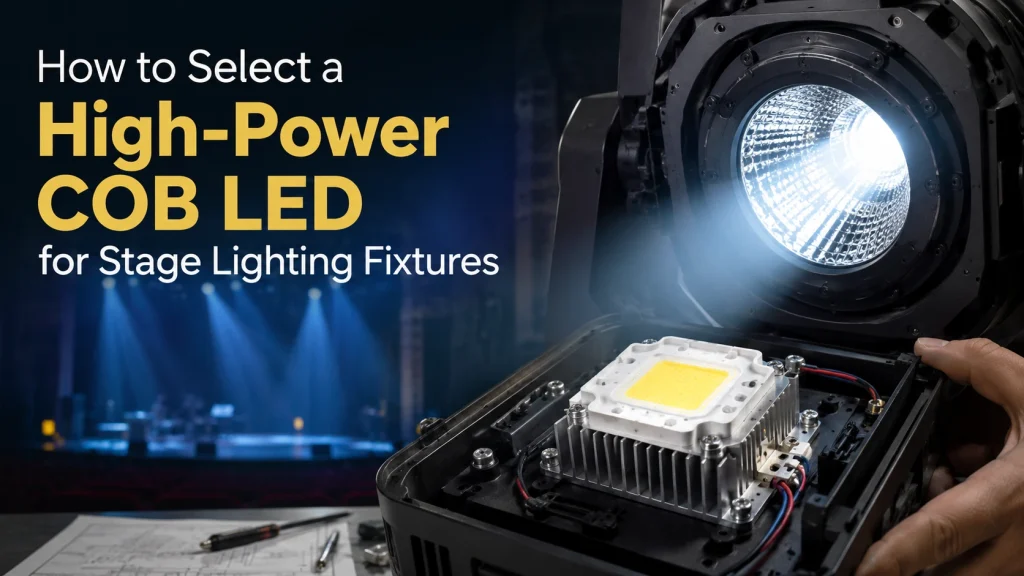
Selecting a high power COB LED for stage lighting by wattage or CRI alone can result in weak throw, poor beam control, inaccurate color, camera flicker, unstable low-end dimming, or excessive heat. The COB LED must work with the fixture’s optics, driver, control channels, cooling system, enclosure, and operating environment. For a stage lighting OEM, the task is to convert the fixture’s performance target into measurable source specifications that can be quoted, prototyped, and verified.
Start With the Stage Fixture Type and Required Beam
Define Whether the Fixture Is a Profile, Spot, Wash, Fresnel, or Blinder
A profile or spot typically depends on a controlled optical center, accurate focal position, and sufficient directional intensity. A wash or Fresnel places more emphasis on field uniformity, edge quality, zoom behavior, and smooth color across the beam. A blinder may need rapid high output, but its duty cycle can differ from a fixture designed for continuous full power operation.
Define whether the product needs a sharp projected beam, soft wash, adjustable zoom, broad audience effect, or continuous key light before specifying wattage. This decision affects whether the design should use a compact single COB LED, a larger emitting area, or a multichannel source.
Set Lux, Candela, Beam Angle, Throw Distance, and Target Size
Lumens describe total output but not how much light reaches a performer or scenic surface. A long throw profile may be judged by candela and lux at a stated distance, while a wash fixture may be judged by beam angle, field angle, target diameter, and uniformity.
Document the working distance, required lux or candela, target size, beam and field angles, and allowable optical losses. If an existing fixture is not bright enough, first inspect the reflector, lens transmission, focal alignment, drive current, and operating temperature. Increasing COB LED’s power without correcting an optical mismatch may add heat without improving usable stage output.
Choose the White or Multicolor COB LED Architecture
Compare White, Bi-Color, RGBW, and Multispectral COB LED
The source architecture should follow the fixture’s color task. Fixed white suits products that prioritize stable white quality and simpler control. Bi-color supports tunable white without the full complexity of a color-mixing engine. RGBW adds saturated effects and a white channel, while multispectral sources provide broader color control at the cost of more channels, calibration, driver complexity, and thermal load.
| Source architecture | Suitable requirement | Main purchasing risk |
| Fixed white | Stable white output | Limited CCT flexibility |
| Bi-color | Tunable white | Channel balance |
| RGBW | Color effects plus white | White quality depends on channel design |
| Multispectral | Wider gamut and color control | More complex calibration and cooling |
Projects focused on white light quality or camera use can review the film and photography COB LED series as a source architecture reference. Final suitability still depends on the stage fixture’s optics, controls, and thermal design.
Specify CCT, CRI, R9, TLCI, TM-30, Duv, and Spectrum
CRI alone is not a complete color specification for theater, broadcast, or camera facing work. TM-30 adds information about fidelity, gamut, and hue shifts, while TLCI focuses on rendering through a television camera system. Spectral data can reveal gaps or peaks that one score does not show.
Specify the required CCT range, color tolerance, CRI, R9, TLCI, TM-30, Duv, and spectral power distribution where relevant. Verify color at different dimming levels, channel mixes, and operating temperatures. Saturated effect lighting may prioritize output and gamut, while theatrical front light or broadcast key light usually requires stronger white light evidence.
Match COB LED’s Power and LES to the Optical System
Select Power From the Required Fixture Output, Not the Wattage Label
A higher wattage COB LED is not automatically a better stage light source. Effective output also depends on efficacy, spectrum, drive current, temperature, LES, and optical transmission. High CRI or multispectral sources may trade some raw output for color quality, while a poorly matched reflector can waste available light.
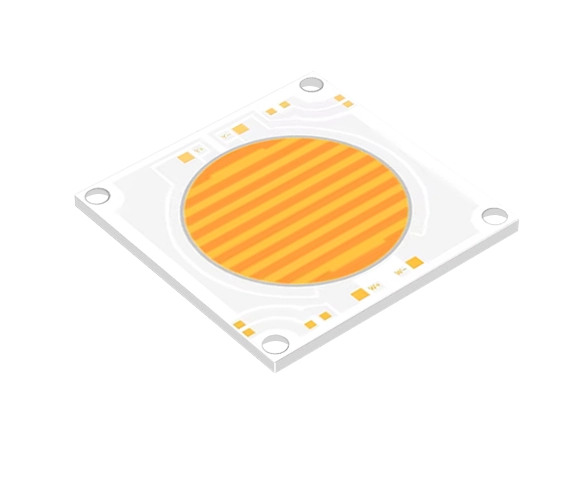
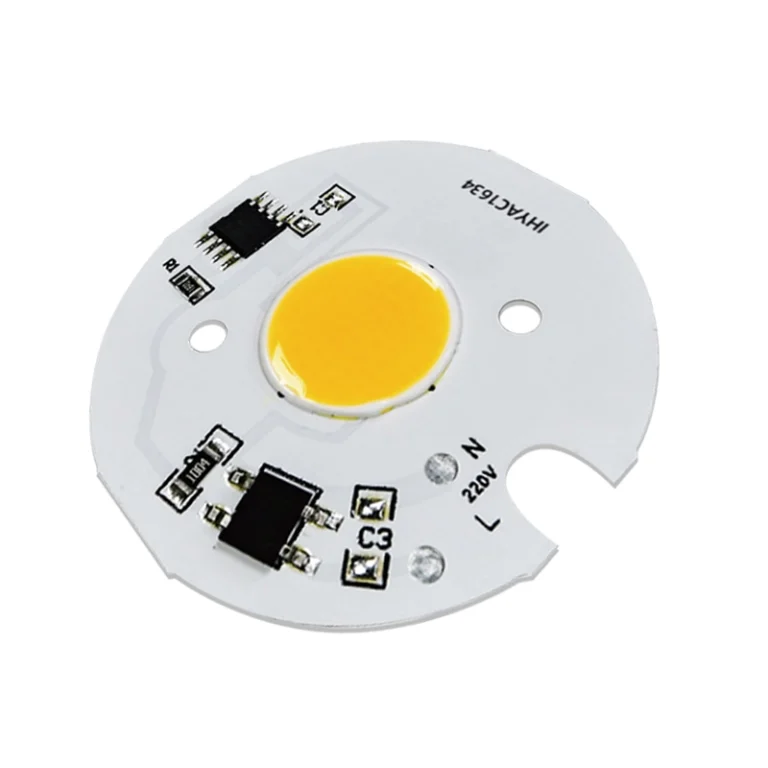
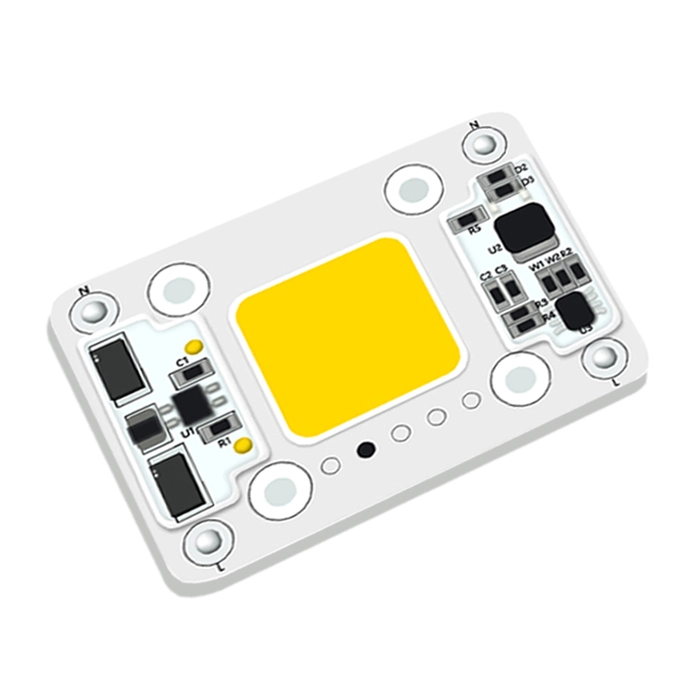
Request flux or intensity data with the test current, temperature, CCT, and optical conditions. Verify the result in a prototype fixture. Once the beam, output, driver, and thermal limits are defined, the high power COB LED module range can be reviewed to determine whether a standard platform is suitable. IHY publicly lists high power COB LED products and stage lighting among its application areas.
Match LES Size to the Reflector, Lens, Zoom, and Focal Position
LES size affects light density and optical control. A compact LES can support tighter beams and higher directional intensity in some profile or spot designs. A larger LES may suit broader fields but can be harder to focus through optics designed for a smaller source.
Confirm the LES dimensions, emitting-surface position, optical center, focal distance, reflector aperture, lens diameter, and zoom path. A replacement COB LED with the same board size can still change the beam if its LES differs. Custom LES development may be justified when standard sources cannot satisfy the optical and mechanical constraints together.
Match the Driver, Channels, Dimming, and Flicker Performance
Match Current, Full Vf Range, and Channel Configuration
Select the driver from each channel’s electrical data, not from total wattage. Obtain the recommended and maximum current, minimum/typical/maximum Vf, test temperature, polarity, channel arrangement, and wiring diagram. Bi-color, RGBW, and multispectral COB LEDs require separate data for each channel because voltage, current, and optical output may differ.
A high voltage, lower current architecture may reduce conductor current but needs a suitable driver output window and safety design. A low voltage, high current system may require larger conductors, stronger connectors, and closer control of voltage drop. Evaluate the driver, PCB, terminals, and COB LED as one electrical system.
Test Low End Dimming, Fade to Black, and Camera Flicker
A fixture that appears stable to the eye may show rolling bars or flicker when PWM frequency interacts with camera frame rate or shutter settings. Professional guidance recommends real world camera testing and notes that changing PWM frequency can help in some conditions.
Test full output, mid-level dimming, the lowest usable level, fade-to-black, and repeated fades with the intended controller. For multichannel sources, check color shift and channel synchronization as output falls. Flicker performance belongs to the driver, controls, source, and operating mode together; it should not be attributed to the COB LED alone.
Verify Thermal, Acoustic, and Mechanical Feasibility
Check Heat Load, Cooling, Derating, and Final Enclosure Temperature
High power in a compact fixture can make thermal design the limiting factor. Passive cooling may work where heatsink area and airflow are adequate. Forced air may be needed at higher power density, but fans add noise, dust exposure, maintenance, and another possible failure point.
Test inside the final or representative enclosure using the intended driver, heat sink, thermal interface, fan mode, ambient temperature, orientation, and duty cycle. Allow the system to reach thermal steady state and record COB LED case temperature, driver temperature, light output, and any derating. A source that meets the optical target when cold may not maintain it after warm up.
Include Fan Noise, PCB Size, Mounting, and Serviceability
Theater, recording, broadcast, and house of worship installations may require low acoustic noise. Professional fixtures often treat high frequency dimming and quiet operation as separate design requirements, so thermal and acoustic decisions should be made together.
Confirm PCB dimensions, thickness, mounting holes, LES center, connector position, heatsink contact area, wiring clearance, and optical alignment. Decide whether the COB LED can be replaced independently or only as part of a complete light engine. A serviceable interface must still provide reliable electrical and thermal contact.
Replace or Upgrade a Stage Light COB LED Safely
Check Electrical, Thermal, Mechanical, Optical, and Color Compatibility
The same wattage, CCT, or board size does not prove replacement compatibility. Compare current, Vf range, channels, driver, heat load, mounting, LES position, focus, beam, spectrum, color metrics, and control behavior.
A higher wattage COB LED may exceed the original driver or cooling capacity even if it fits physically. After installation, repeat cold start, thermal, beam, color, dimming, and camera flicker tests. Do not approve an upgrade until the driver, heat sink, optics, enclosure, and control system have been shown to support it.
Decide Between a Standard and Custom Stage Light COB LED
Identify When Custom LES, Voltage, Color Channels, or PCB Is Justified
A standard source is suitable when its LES, PCB, electrical configuration, color data, and thermal interface fit without major redesign. Customization may be justified for a specific focal geometry, unusual board shape, different voltage current architecture, tailored color channels, or closer source-driver-optics integration.
Shenzhen IHY Lighting Co., Ltd. describes its business around mid-to-high-end COB LEDs, integrated driver modules, optical modules, and application-specific solutions, and lists stage lighting among its application fields. A custom COB LED light engine manufacturer is relevant when the project requires coordinated source, driver, PCB, and optical development rather than a component substitution.
Prepare a Stage Light COB LED RFQ and Evaluate Suppliers
Provide Complete Fixture and Operating Requirements
A useful RFQ should include:
- Fixture type and intended function
- Target lux or candela and throw distance
- Beam and field angles
- LES limits and optical drawing
- White, bi-color, RGBW, or multispectral architecture
- CCT and required color metrics
- Driver and dimming method
- Camera and flicker test conditions
- Cooling method and acoustic limit
- PCB space, sample quantity, and expected volume
For replacement work, add the original COB LED datasheet, driver label, mechanical drawing, beam photographs, temperature records, and failure symptoms. “Need a 200W high CRI COB LED” is insufficient because suppliers may use different test currents, temperatures, LES dimensions, and spectral designs.
Request Comparable Evidence Before Supplier Approval
Request complete electrical data by channel, flux or intensity with test conditions, LES and mechanical drawings, color and spectral reports, thermal limits, measurement points, mounting requirements, and a sample validation plan. Resolve inconsistencies among voltage, current, channels, and total power before ordering prototypes.
Shenzhen IHY Lighting Co., Ltd. publicly presents high power COB LED, film photography COB LED, driver integration, optical modules, and customized light engine capabilities. Final stage-lighting performance should still be controlled through an approved project specification and tests in the actual fixture.
Conclusion
A high power COB LED for stage lighting should be selected from the fixture’s beam, distance, color, LES, driver, dimming, flicker, thermal, acoustic, and mechanical requirements. Wattage and CRI are starting data, not a complete specification.
For an engineering review, prepare the fixture type, target output, optical drawing, color architecture, driver data, cooling and noise limits, sample quantity, expected volume, and any replacement photographs or failure records. Submit them through submit a stage light COB LED inquiry so a standard source or custom light engine approach can be evaluated.
Frequently Asked Questions About Stage Light COB LED
What CRI is needed for stage light ?
It depends on the application. Saturated effects may prioritize gamut and output, while theatrical front light, skin tones, broadcast, and camera work may require CRI, R9, TLCI, TM-30, and spectral data.
Is TLCI more important than CRI for stage lighting?
Neither replaces the other. CRI and TM-30 describe aspects of visual color rendition, while TLCI focuses on television-camera rendering. Camera facing projects should review several metrics and the spectrum.
Is a white COB LED or RGBW COB LED better for a stage light?
Fixed white is simpler when high quality white output is the main goal. RGBW adds color effects, but the choice depends on white quality, gamut, channel design, driver complexity, and thermal limits.
How can flicker be prevented in a COB LED stage light?
Match the driver and control method, evaluate ripple and PWM behavior, and test the finished fixture with the intended frame rates, shutter settings, dimming levels, and temperatures.
Can a higher wattage COB LED replace an existing stage light COB LED ?
Only after electrical, thermal, mechanical, optical, color, and control compatibility are confirmed. The original driver, cooling system, optics, and enclosure may not support it.