



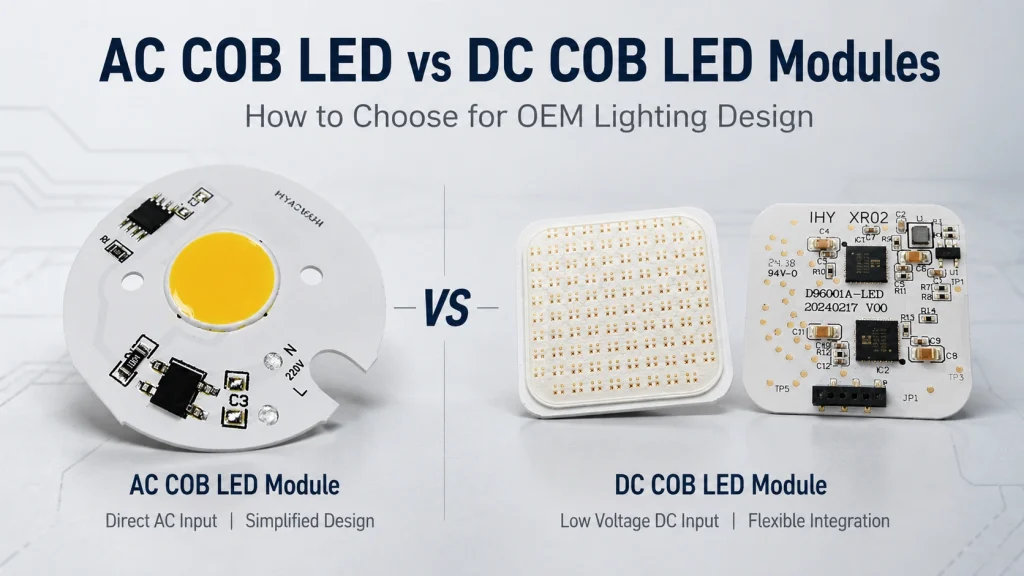
Choosing between an AC COB LED and a DC COB LED module is not, about voltage. For OEM lighting the decision affects power system, driver requirements, heat management, ways to dim and how easy it is to fix or change. The right choice depends on how the machine gets its power and how it is managed.
AC vs DC COB LED Modules: Key Differences at a Glance
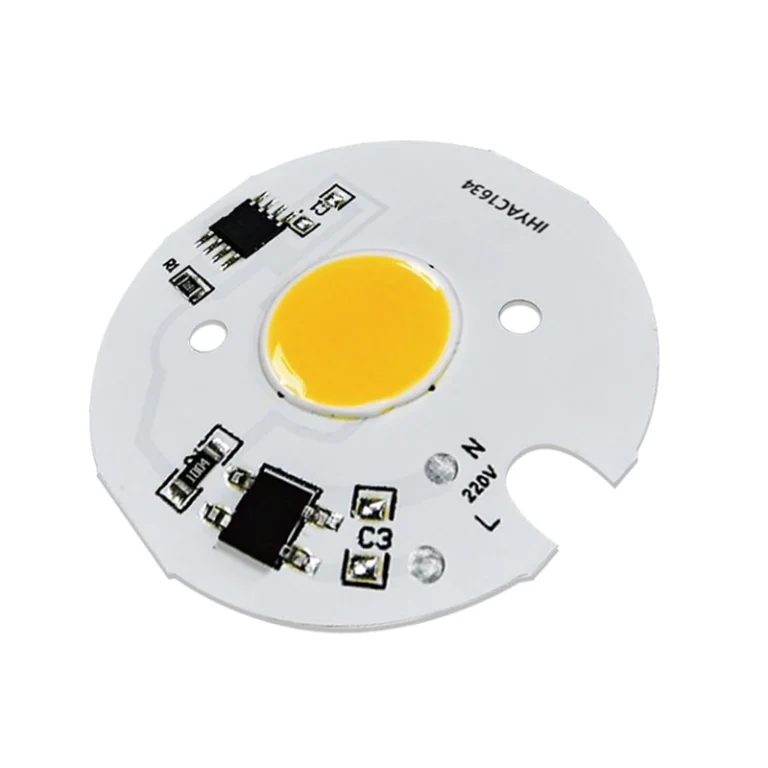
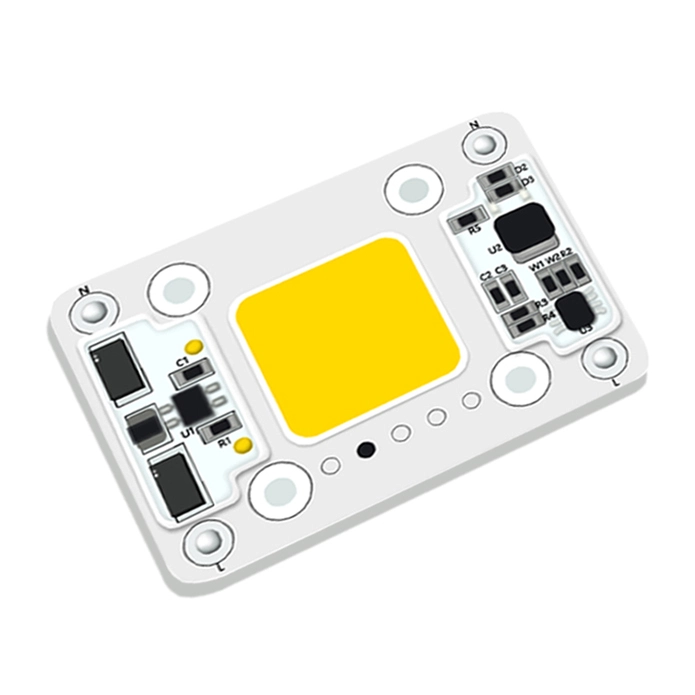
An AC COB LED module can include power‑control parts. Take a specific AC input without needing an external driver.A DC COB LED module may operate from a defined DC input or depend on external current regulation. Verify the supply boundary from the specification.
| Comparison Point | AC COB LED Module | DC COB LED Module |
| Power source | Defined AC input | Defined DC input or driver output |
| External driver | May not require one | Depends on architecture |
| Integration | Can reduce separate power components | Fits many existing DC/driver systems |
| Dimming/control | Must match onboard architecture | Often depends on external driver/control |
| Serviceability | Integrated electronics change replacement strategy | Driver and module may be serviced separately |
Buyers comparing AC COB LED modules with DC alternatives should start from system architecture rather than wattage alone.
When Is an AC COB LED Module the Better Choice?
AC modules suit fixtures powered from AC mains when the design benefits from integrating more electronics on the light-source PCB. IHY Lighting’s published AC range includes 120 V and 220 V module examples, so direct-mains and driver-on-board architectures are within its current product scope.
Choose an AC COB Module When Integration and Fixture Space Matter
An integrated AC or DOB COB LED can suit compact luminaires or equipment where a separate driver and extra wiring create mechanical constraints. It is less attractive when the equipment already has a qualified DC bus or requires an independent control system.
Before sourcing, confirm the AC input range, frequency, wiring method, board dimensions, dimming requirements, protection boundary, and thermal environment. “Driverless COB LED” should not be interpreted as an LED board operating without power-control electronics.
Check Dimming, Flicker, Heat, and Protection Before Approving an AC Design
A module that works on a bench might act differently inside the case. The way the heatsink touches the surface the temperature, inside the case the wires, how the controller works and the electronics that are built in can all change how things run. Flicker unstable dimming, the system turning off or getting too hot should be looked into as problems that happen at the system level.
Prototype testing must use the enclosure real heatsink, real controller, real wiring and real ambient conditions. Buyers must ask for the dimming interface, operating limits and protection data that is available. For deeper electrical checks, use the COB LED driver selection guide.
When Is a DC COB LED Module the Better Choice?
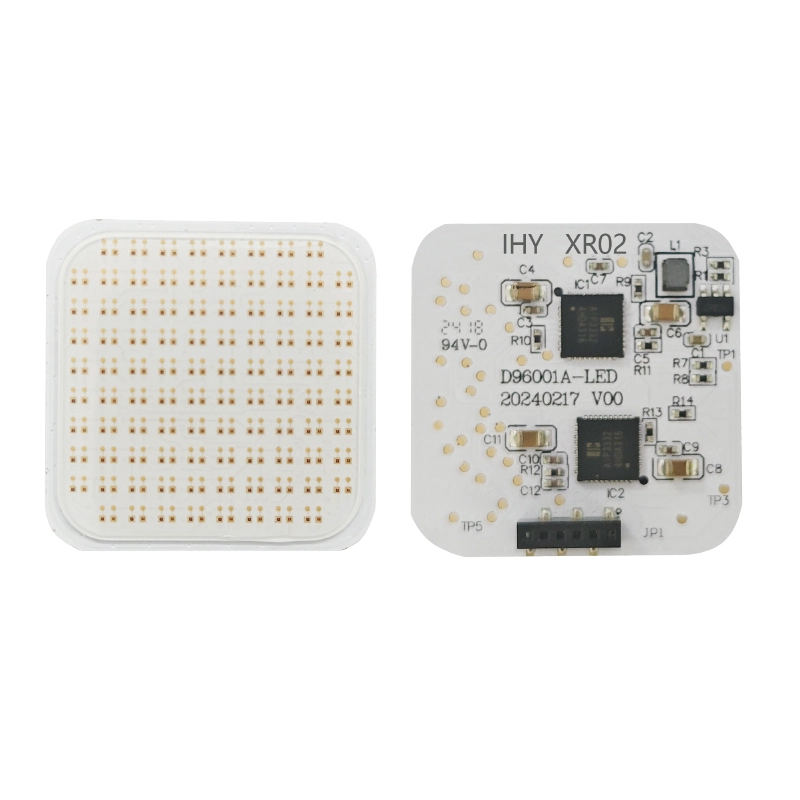
DC modules often fit equipment that already has a low-voltage bus, battery source, separate LED driver, or independent control architecture. IHY Lighting lists low-voltage DC module examples, including 2 V, 12 V, and 24 V product entries.
Choose DC When the System Needs a Low-Voltage Bus, External Driver, or Flexible Control
A DC architecture can suit battery powered equipment. A DC architecture can also fit systems that already have a DC supply. A DC architecture can work well for products that keep a driver for dimming, servicing or thermal separation.
However, “DC” does not mean any constant voltage supply is suitable. Some LED modules need constant current control; others come with built‑in electronics. Take a specified regulated DC input. Before picking a DC COB LED module check the input limits the desired current, the polarity, the wiring and whether extra regulation is needed.
Do Not Assume “12V” or “24V” Means Direct Power-Supply Compatibility
A nominal voltage is not a complete power specification. A “12 V COB LED” may refer to a regulated module input, a nominal operating condition, or a forward-voltage region that still requires current control.
Request documentation that states how the module should be powered. Confirm the allowed input range, rated current, polarity, onboard regulation, and external driver requirement. Do not approve a replacement only because the wattage and voltage label appear similar.
What Causes AC/DC COB LED Integration Failures—and How Can You Prevent Them?
Integration failures frequently arise when the module does not match its thermal, mechanical or control interfaces.
Diagnose the Electrical and Thermal Interface Before Replacing the Module
If a replacement flickers it does not start it runs too hot. It cannot reach stable output check the system before changing wattage. Flicker may point to driver or control compatibility. No-start behavior may indicate an input mismatch. Overheating may involve the PCB the heatsink interface, the enclosure temperature, the mounting or the load.
A light that has the wattage is not automatically something you can just swap out. Changing from AC to DC or from DC to AC might need changes, to the driver the wires, the connectors and how it is controlled.
Write down the light the power source, the size and what the problem was before you ask for a replacement.
How to Choose Between AC and DC COB LED Modules for Your Project
Use five questions:
- What power source already exists? Mains input may justify AC integration; an established DC bus or approved driver often favors DC.
- Is fixture space limited? If a separate driver compartment or extra wiring is difficult to accommodate, AC/DOB deserves review.
- Does the product require specialized dimming or control? Confirm the interface first.
- How important is field serviceability? Integrated electronics and separately replaceable drivers create different maintenance paths.
- Has the final thermal environment been validated? Neither architecture should be approved from open-bench operation alone.
For projects that need custom mechanical integration IHY Lighting offers COB, driver, power-management and other parts as configurable pieces of integrated light-engine solutions. IHY Lighting also lets project parts that fit needs.
What Should You Confirm Before Buying an AC or DC COB LED Module?
A useful RFQ should describe the system in full. It should not focus on voltage and wattage. Include the type of power source whether it is AC or DC. Mention the target power or current needed. Explain the driver or control method that will be used. State any dimming requirements. Provide the board size. Describe any mounting constraints. Specify the connector position. Include details, about the heatsink or housing. Mention the environment where the system will operate. State the application. Give the required quantities. Attach any existing drawing or sample if available.
These details help decide if a standard product, custom AC COB LED module, custom DC COB LED module or light-engine redesign is the choice.
How to Evaluate an AC/DC COB LED Module Supplier
A supplier should clearly define the boundary. Give drawings and connection information. Talk about mechanical constraints. Explain the difference, between a COB and a regulated DC or an integrated AC module. Prototype evaluation, in the fixture is also important.
IHY Lighting openly talks about customization that includes specifications, PCB integration, driver, on-board design and built-in electronic components. These features are important when a regular module doesn’t work for the space the power setup or the use case.
Conclusion
The choice between AC COB LED and DC COB LED should happen at the system level. AC modules are good for projects where the main power supply, small size and built-in featuresre important. DC modules work well for devices that already have a low-voltage power source, a battery, an external driver or a separate control system. In both cases check the power range, heat levels how the lighting can be dimmed what protections are needed how it will fit physically and how it will be maintained before giving the go-ahead.
For a project check send the module or blueprint the power source, the size, the place where it will be used how many are needed what it will be used for and any pictures of problems to IHY Lighting, through their contact.
FAQs About AC vs DC COB LED Modules
Does an AC COB LED module need an external driver?
Not necessarily. Some AC modules contain current‑control or driver electronics. Are built for a specific AC input. Check the specification and wiring diagram than assume that every AC COB LED needs—or does not need—a separate driver.
Can a 12V DC COB LED connect directly to a 12V power supply?
Only if the specification says that the module accepts a 12 V input. If 12 V refers to the LED’s operating or forward‑voltage condition the module may still need regulation.
Which lasts longer, an AC or DC COB LED module?
AC or DC architecture alone does not decide how long a device will last. Temperature, how the drive is used the electronics, on board how heat is managed how often it runs and the surroundings all change how reliable the device is.
Can an AC COB LED replace a DC COB LED?
Usually it’s not about the wattage. You should check the power input, driver or control architecture, how heat’s handled board size, how it’s mounted, connector layout and what kind of protection is needed before switching to a different design.