




For an OEM, the right COB LED channel architecture is the one that meets the product’s white-light and color requirements with the fewest channels the control system can support. RGB is suited to color effects when white quality is secondary. RGBW adds one dedicated white channel at a selected white point. RGBCW adds separate cool and warm white channels, which can support tunable white as well as RGB color. The choice affects more than the emitter: it changes the driver outputs, control mapping, calibration, PCB layout, thermal budget, and validation plan.
What RGB, RGBW, and RGBCW Mean in a COB LED
The letters describe independently controlled color channels, but naming is not fully standardized across catalogs. In this guide, RGB means red, green, and blue; RGBW means RGB plus one white channel; and RGBCW means RGB plus cool white and warm white channels. Confirm the actual emitter arrangement, channel count, and white channel targets on the supplier’s drawing and electrical specification. Some suppliers use RGBWW or RGB+CCT for related dual white arrangements, so the label alone is not a sufficient purchase specification.
| Architecture | White light role | OEM decision / trade-off |
| RGB | RGB channels mix a white like output | Color effects first; white quality is secondary |
| RGBW | One dedicated white channel | Color effects combined with a defined white light output. It does not provide independent warm-to-cool white adjustment through dedicated white channels. |
| RGBCW | Separate cool and warm white channels can be blended | RGB plus adjustable white; more control and driver coordination |
Start With the Fixture’s White-Light Job
Write down what the finished fixture must do before selecting emitters. If the product mainly creates saturated color effects and only occasionally needs a neutral looking scene, RGB may be sufficient, provided mixed white appearance is acceptable in the application. If it needs a repeatable white output at one specified color point, RGBW can reserve a channel for that job rather than relying on an RGB mixture.
Choose RGBCW when users need both color effects and a change in white appearance across defined warm and cool endpoints. The two white channels can be blended to move between those endpoints, but the achievable range, transition behavior, color consistency, and output at intermediate settings depend on the selected emitters and drive conditions. If the product requires high quality white for task illumination, do not assume that adding more color channels guarantees it; define the white-light quality criteria separately and verify them in the assembled fixture.
The decision is therefore not simply “more channels are better.” A fixed white product may not benefit from a color engine at all. A decorative product may not benefit from tunable white. Additional channels earn their place only when they enable a user visible function that the product requirements call for.
Treat the LED and Control System as One Architecture
Each independently driven channel needs a compatible driver output and a defined control path. Before committing to a COB layout, map every emitter channel to driver terminals, controller outputs, dimming method, connector pins, and firmware or user interface behavior. Confirm channel polarity, current requirements, forward voltage ranges, allowable combinations, and whether channels may operate simultaneously. Do not size the driver from a single total wattage figure when channel loads differ.The rated current and forward voltage may differ between channels, so each channel should have its own electrical specification. OEMs should confirm the rated current, forward voltage range, and maximum allowable current for every channel. They should also check the total power under the intended simultaneous operating modes to ensure that the driver can support the actual load conditions.
For RGBW, document how the controller selects the white channel and how it behaves when color and white are requested together. For RGBCW, define whether cool and warm white can run simultaneously, how they are mixed, and whether the control interface exposes a CCT slider, discrete presets, or another behavior. A five channel source can become a poor product fit if the controller, wiring, software, or user interface cannot manage those channels reliably.
Channel count also affects PCB routing, connector selection, assembly, and available space. It may change total heat under simultaneous operation and create different thermal conditions across the emitting area. Review the actual operating modes, not just a single channel test. Measure the source and driver in the representative enclosure after the assembly reaches thermal stability; confirm that the specified current and color behavior remain within the project limits.
Build the Channel Specification Around the Fixture
Give suppliers a channel level specification rather than a short label such as “RGBW COB.” A useful package identifies the intended application, required RGB color behavior, number of independent outputs, white channel targets, acceptable color tolerance, drive current and voltage limits by channel, control and dimming method, simultaneous operating modes, thermal conditions, board envelope, optical constraints, and the tests required for sample approval. For RGBCW, state the warm and cool white endpoints and how intermediate settings will be evaluated.
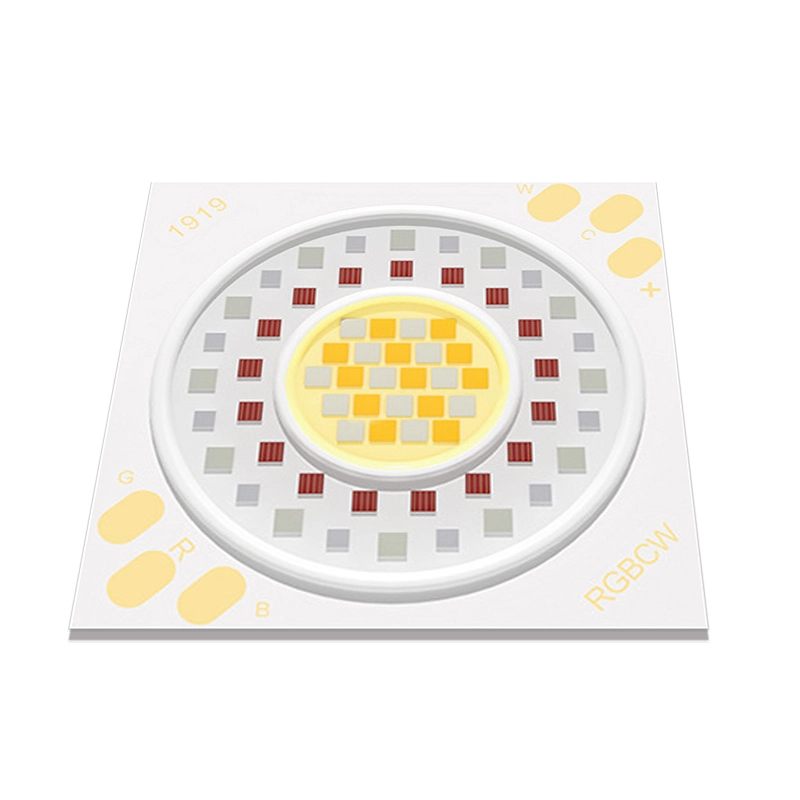
Ask for a pinout, electrical data by channel, a mechanical drawing, and a description of the intended control behavior. In the prototype, test the full RGB range, dedicated white operation, mixed color plus white modes, low level dimming, repeated transitions, and thermal behavior in the intended housing. For RGBCW, check the white transition at several intermediate points, not only the warm and cool endpoints. If color balance changes with dimming or temperature, record the condition and resolve whether the cause is the emitter mix, driver, control algorithm, or optical stack.
COB packaging describes how the light-emitting surface is assembled; it does not by itself specify channel count, white quality, control capability, or final fixture performance. Confirm that the source’s emitting area and optical position fit the lens, reflector, diffuser, or other optical components. A nominally compatible board can still produce a different beam or appearance if its emitting area or placement changes.
When Customization Is Worth Evaluating
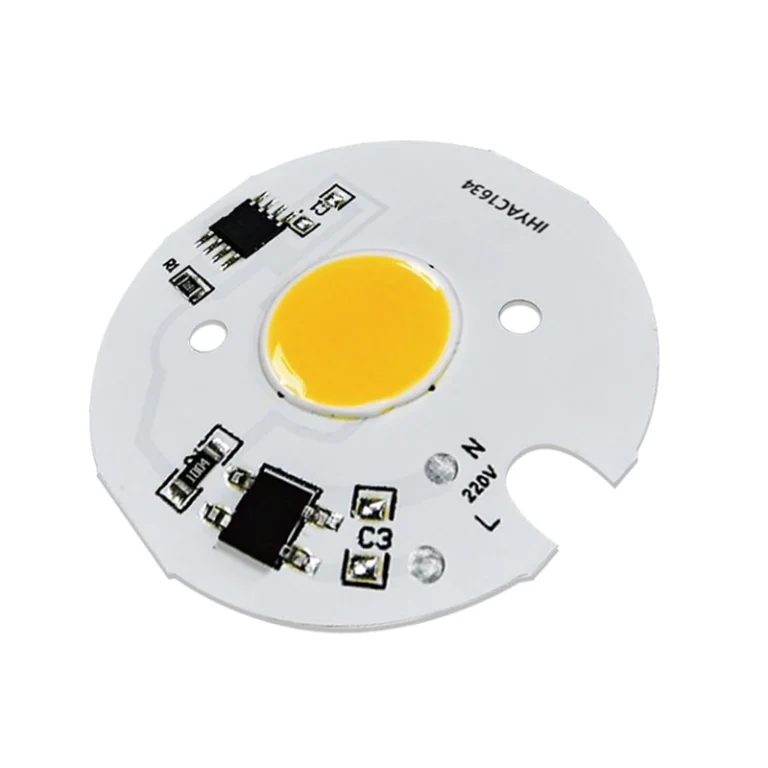
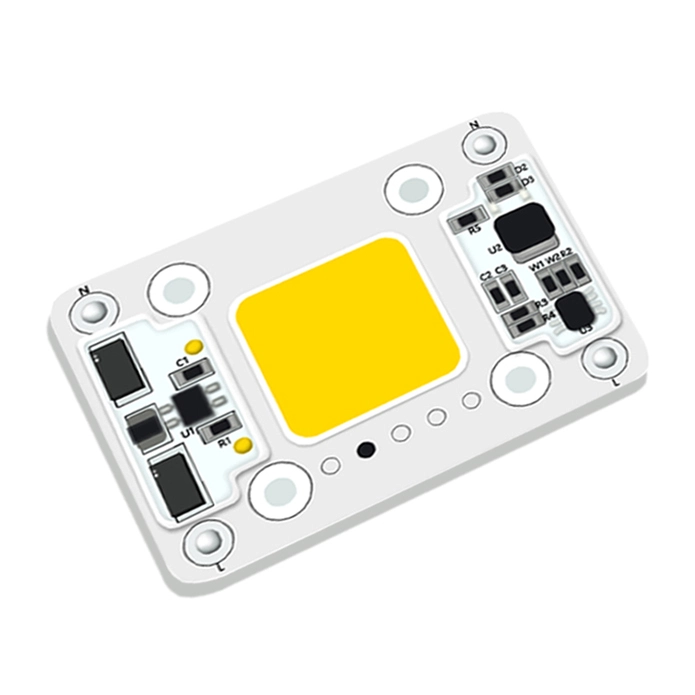
A standard source is preferable when its channel configuration, electrical data, emitting area, board geometry, optics, and thermal interface already fit the product. Customization becomes relevant when a required channel combination, board shape, driver integration, optical position, or control interface cannot be met by a standard option without compromising the design. Shenzhen IHY Lighting describes its work around COB LEDs, LED modules, integrated drivers, optical modules, and application specific solutions; its COB LED portfolio is a starting point for reviewing available source formats, while its LED module range and general-lighting solution work are relevant when the product needs broader integration. These pages do not establish that a particular RGBW or RGBCW configuration is a standard catalog item, so the required architecture should be confirmed against the project specification.
Conclusion
Choose RGB for color first products that do not rely on dedicated white output, RGBW for color plus one defined white point, and RGBCW when the product needs RGB together with adjustable cool-to-warm white. Then verify that the driver, controls, board, optics, thermal design, and validation plan support the selected channels as one system. The most defensible choice is the least complex architecture that satisfies the fixture’s documented user requirements.
Frequently Asked Questions
Does RGB create true white light?
RGB can mix its red, green, and blue channels to produce a white like appearance, but the result depends on the emitters, drive levels, optics, and observer or camera. If the fixture needs a specified white point or color quality, measure the output against the project criteria rather than assuming the mixture will be suitable.
Is RGBW better than RGBCW?
Neither is universally better. RGBW suits a product that needs one dedicated white channel. RGBCW is more appropriate when users need separate cool and warm white channels in addition to RGB, provided the extra driver and control complexity is justified.
Does RGBCW always provide tunable white?
It provides separate cool and warm white channels that may be blended for tunable white. The usable range and quality depend on the specified emitters, control method, drive limits, and validation results; confirm these details in the actual product specification.
What should an OEM request before approving samples?
Request the channel map, per-channel electrical data, pinout, mechanical drawing, white-channel targets, control behavior, operating limits, and sample test plan. Test the important channel combinations and transitions in the representative fixture and enclosure.
For a project fit check, share the fixture application, required white behavior, channel map, driver and control requirements, board or optical drawing, operating conditions, and sample quantity with the IHY Lighting technical team. Review the COB LED light-engine overview first if the source, driver, and optics need to be considered together.