



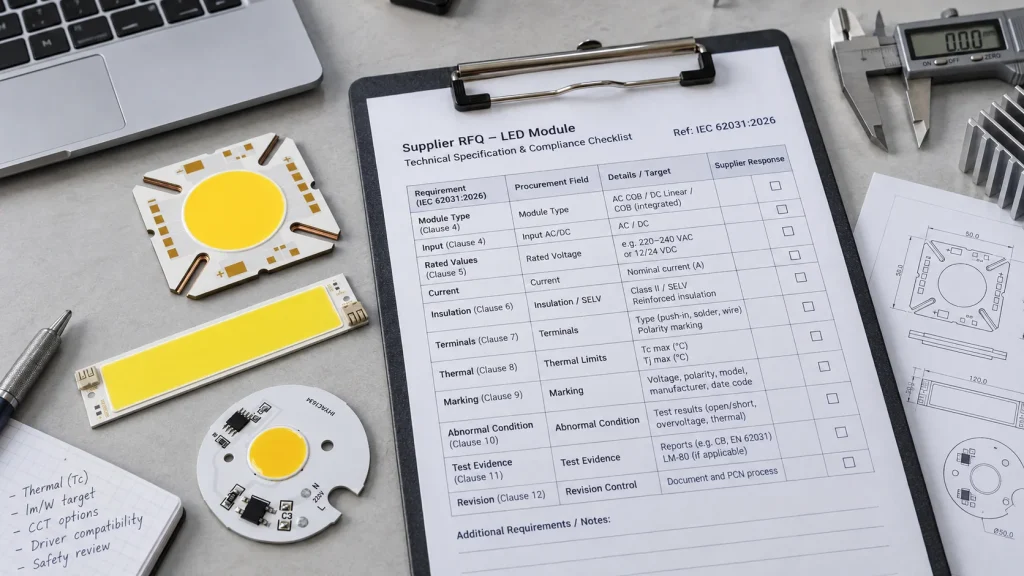
An LED module request for quotation (RFQ) should do more than list wattage, voltage, and color temperature. It should define exactly what the supplier is expected to deliver, how the module will be powered, which functions are integrated, and what technical evidence is needed for the intended application. Clear requirements help OEM teams compare quotations on the same basis and reduce avoidable changes during sampling and design validation.
IEC 62031:2026 is the third edition of the International Standard for LED module safety requirements. It applies to LED modules intended to operate on DC supplies up to 1,500 V or AC supplies up to 1,000 V. It does not define LED-module performance requirements, and it does not apply to LED packages, automotive LED modules, OLED modules, or LED lamps. The standard should therefore be considered alongside the product design, the complete equipment, and the requirements of the target market.
Define the Product Boundary First
Before asking suppliers for electrical ratings, describe the assembly being quoted. A bare LED board, a module with integrated controlgear, and a more complete light engine may look similar in a catalogue but contain different functions and place different responsibilities on the supplier and the OEM.
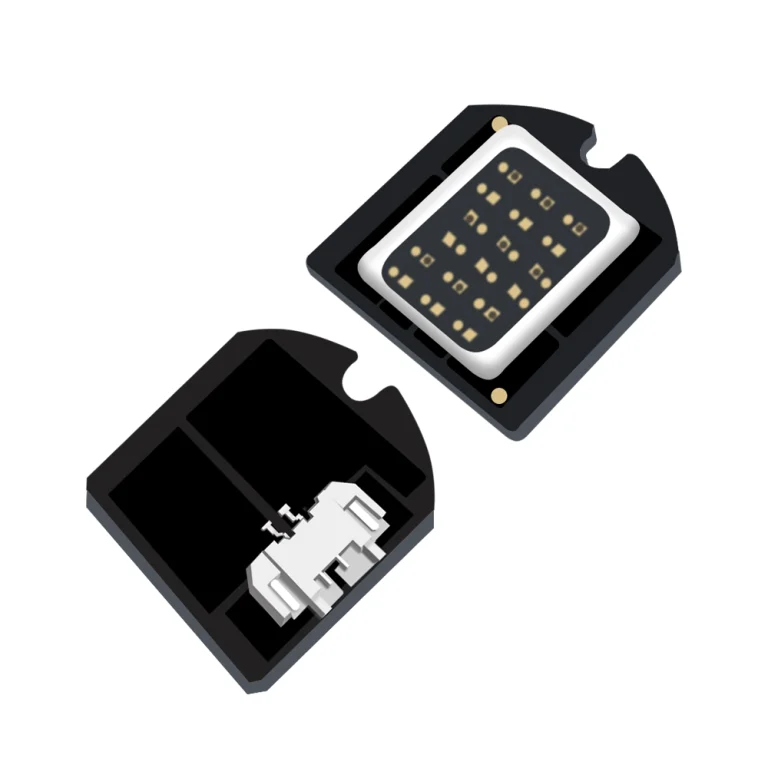
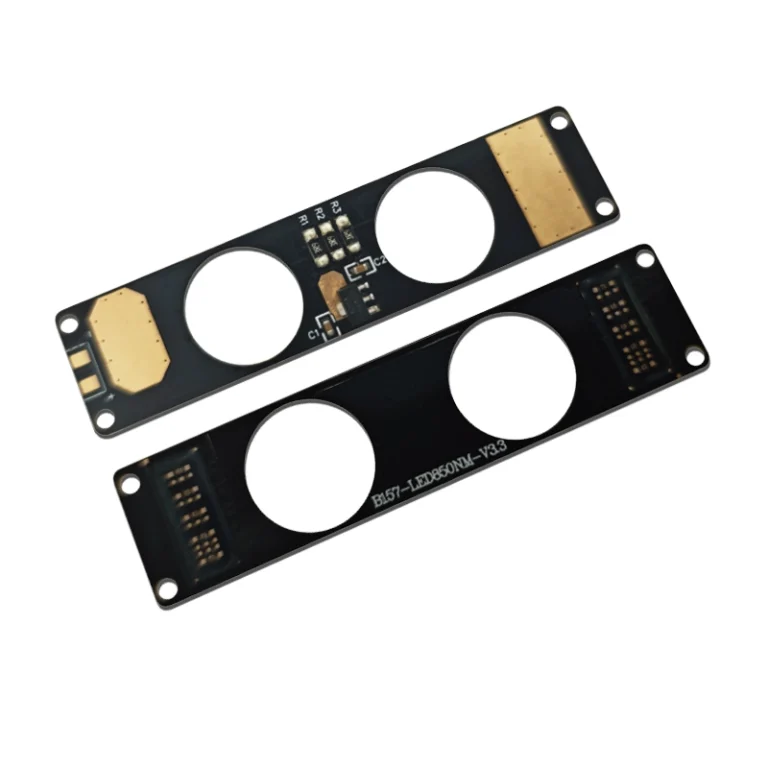
List the elements included in the supply: LED packages or a COB light source, PCB or other substrate, driver or controlgear, capacitors and resistors, connectors, control terminals, thermal interface materials, optics, housing, and protective components. Then state what will be provided by the OEM, such as the external driver, heatsink, luminaire enclosure, wiring, or control system.
This boundary is especially important for integrated and built-in modules. IEC 62031:2026 clarifies the scope and applicability of the requirements to independent and integral LED modules. Its scope notes also clarify how products previously described as independent LED modules are treated in the updated framework. Confirm the applicable assessment route for the actual product rather than inferring it from a sales description.
Separate Supply Architecture from Light-Source Structure
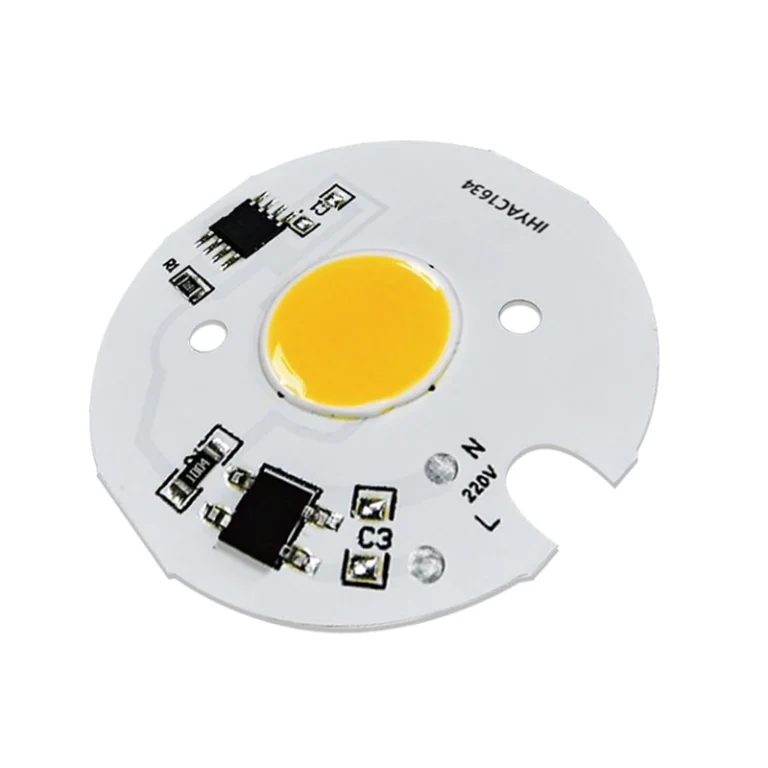
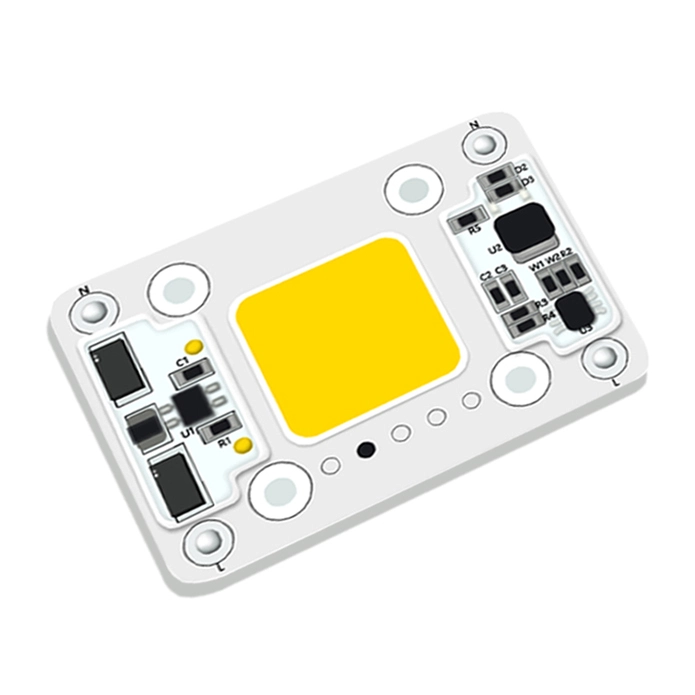
AC, DC, COB, and SMD should not be treated as four mutually exclusive module types. AC and DC describe the electrical supply architecture. COB and SMD describe light-source construction and integration. A COB light source can be used in a DC-powered module, and a module may also incorporate AC input and power-conversion circuitry.
For a useful RFQ, define these two dimensions separately: first, whether the module is AC-powered or DC-powered; second, whether its light source is COB, SMD, or another specified construction. Then add the requirements that apply to the complete assembly.
Build a Common RFQ Information Set
The following items are practical information to request from a supplier. They help engineering and compliance teams review a quotation, but they should not be read as a claim that every item is a separately mandated field for every product under IEC 62031.
| RFQ item | Information to specify or request |
| Product identity | Model number, module type, intended application, drawing number, and revision. |
| Electrical ratings | Rated and permitted input conditions, operating voltage/current, frequency where relevant, polarity, terminals, and connectors. |
| Construction | PCB or substrate type, dimensions, mounting method, insulation arrangement, enclosure assumptions, and accessible parts. |
| Thermal conditions | Mounting surface, heat-transfer path, thermal interface, ambient operating conditions, and defined test conditions. |
| Controls | Dimming method, control terminals, signal type, and whether controlgear is integrated or external. |
| Marking and documents | Product markings, connection instructions, installation information, datasheet, drawings, and document revisions. |
| Safety evidence | Relevant test reports or conformity documentation, exact model coverage, standard edition, and limitations or deviations. |
Add Supply-Architecture-Specific Questions
For AC-Powered Modules
State the nominal input voltage and permitted range, rated frequency, input current or power, connection method, and whether power-conversion circuitry is integrated. Identify any external protective device, switching or dimming control, and the installation conditions assumed by the design. If the product is a direct-mains or DOB-style module, describe the integrated circuitry and the boundaries between the module and the OEM equipment clearly.
For DC-Powered Modules
Specify the nominal and maximum DC voltage, rated operating current, polarity, connector or terminal arrangement, and characteristics of the upstream power supply. State whether the driver is supplied by the OEM or included in the quoted assembly. Where relevant, describe dimming signals, expected transients, and foreseeable abnormal operating conditions that the supplier is expected to consider.
For COB, SMD, and Integrated Light Engines
Describe the light-source construction independently of the input supply. For a COB design, useful details may include the emitting-surface dimensions (LES), chip arrangement, substrate or PCB material and format, rated current and voltage, thermal interface, and optical constraints. For SMD designs, specify package type, placement, spacing, and any relevant array configuration.
Where the application has defined optical targets, include them as product-performance requirements: for example, luminous flux, CCT, CRI, beam angle, or light-distribution limits. These are not performance requirements defined by IEC 62031:2026 itself. Keeping safety requirements and customer performance targets in separate RFQ sections makes responsibilities clearer.
Understand What Changed in the 2026 Edition
IEC 62031:2026 replaces the 2018 second edition and is a technical revision. The IEC publication information identifies a complete review of the document structure, detailed requirements, and tests. It also highlights clarification of scope and applicability to independent and integral modules, updated terms and definitions, clearer general requirements and test requirements, and revised marking provisions, including control-terminal marking.
The edition also includes a review of electrical, thermal, and mechanical safety requirements; updated photobiological safety requirements; and revised fault and abnormal-condition requirements. The annex concerning conformity testing during manufacture has been removed. For an RFQ, identify the exact edition being referenced and request evidence that applies to the actual quoted configuration. Do not assume that a report prepared against the 2018 edition automatically demonstrates conformity with the 2026 edition.
Request Evidence That Matches the Quoted Configuration
Avoid relying on a generic statement such as “IEC 62031 compliant.” Ask the supplier to identify the exact model or product family covered, the standard edition referenced, the drawing and revision, electrical ratings, connection details, markings, installation information, and relevant test or conformity documents.
If the evidence covers a product family, request the family definition and a description of differences that could affect safety, such as changes to the PCB, power components, terminals, insulation, thermal interface, materials, or module architecture. Confirm whether the quoted version is identical to the evaluated version. A document without clear model identification or configuration traceability may be difficult to use during design validation.
Add a change-control requirement to the RFQ. Safety-relevant changes should be reviewed before production release, and the supplier should notify the OEM when a change may affect the evaluated configuration. Whether additional testing or assessment is needed depends on the product, the evidence already available, the target market, and the applicable conformity route.
A Practical RFQ Review Sequence
- Define the end equipment, application, target market, and intended function of the LED module.
- Draw the supply boundary and list the electrical, thermal, mechanical, optical, and control functions included.
- Specify the supply architecture (AC or DC) separately from the light-source construction (COB, SMD, or other).
- Record rated, maximum, and relevant abnormal operating conditions, together with the intended installation environment.
- Request controlled drawings, revisions, markings, installation information, and safety evidence for the exact configuration.
- Assign each open item to an owner: supplier clarification, design change, additional evaluation, or confirmation by the relevant laboratory or certification body.
Conclusion
A strong LED module RFQ connects safety requirements to a clearly defined product configuration. Start by setting the module boundary, distinguish AC or DC supply architecture from COB or SMD light-source construction, and separate safety evidence from application-specific performance targets. Then request documents that identify the exact model, revision, standard edition, and evaluated configuration.
For OEM projects, this approach makes supplier quotations easier to compare and gives engineering teams a clearer basis for sample evaluation, design validation, and change control. IHY Lighting works with AC, DC, COB, SMD, and custom integrated LED modules. For a project review or quotation, provide the application, drawings, available dimensions, electrical conditions, operating environment, target market, and expected quantity so the proposed configuration can be assessed against the actual requirements.
FAQs
Does IEC 62031:2026 define LED-module brightness or color performance?
No. IEC 62031:2026 addresses LED-module safety requirements, not performance characteristics. Requirements such as luminous flux, CCT, CRI, and beam angle should be stated separately in the RFQ when relevant.
Does IEC 62031:2026 apply to every COB LED product?
No. The product must first fall within the standard’s definition and scope for an LED module. The standard does not apply to LED packages, automotive LED modules, OLED modules, or LED lamps. A COB package by itself should not automatically be treated as an IEC 62031 LED module.
Are AC, DC, and COB three different module categories?
Not in the same sense. AC and DC describe the supply architecture, while COB describes a light-source construction. A COB module can be designed for a DC supply or incorporated into an AC-powered assembly.
What should an OEM request when a supplier claims IEC 62031 conformity?
Ask for the exact model and revision covered, the edition referenced, relevant drawings and ratings, and applicable test or conformity documentation. If a report covers a family, request its scope and the differences between variants.