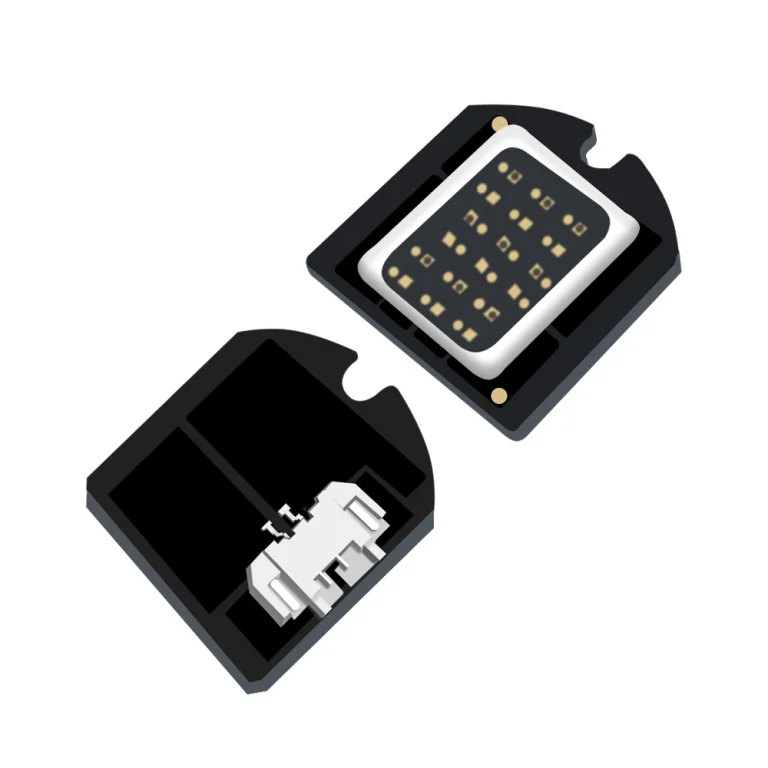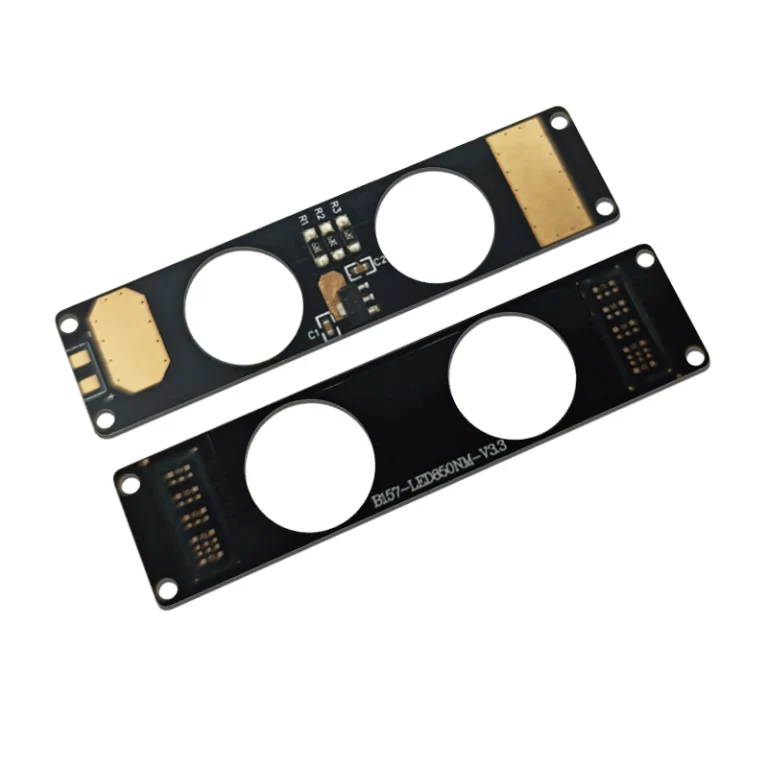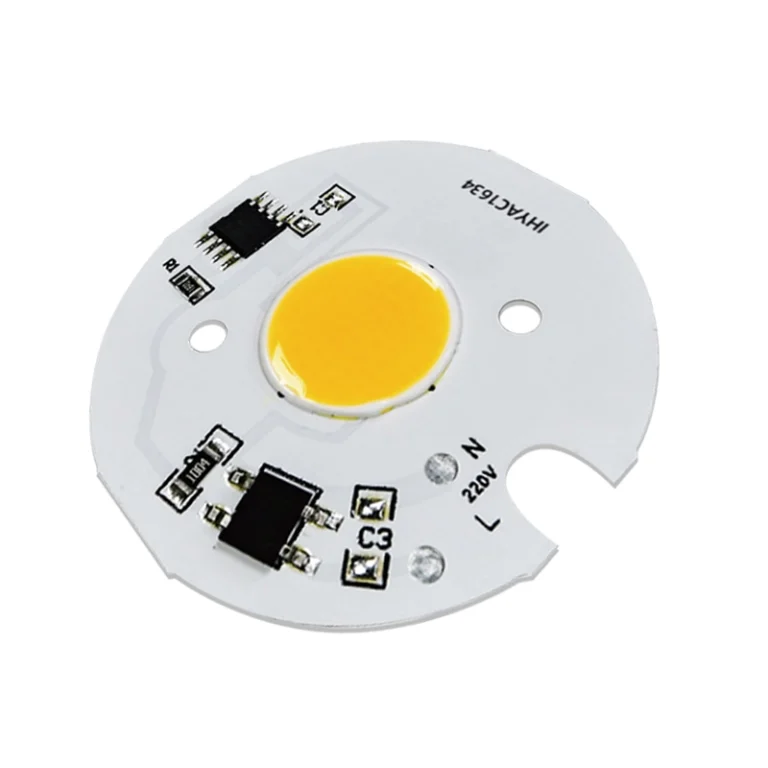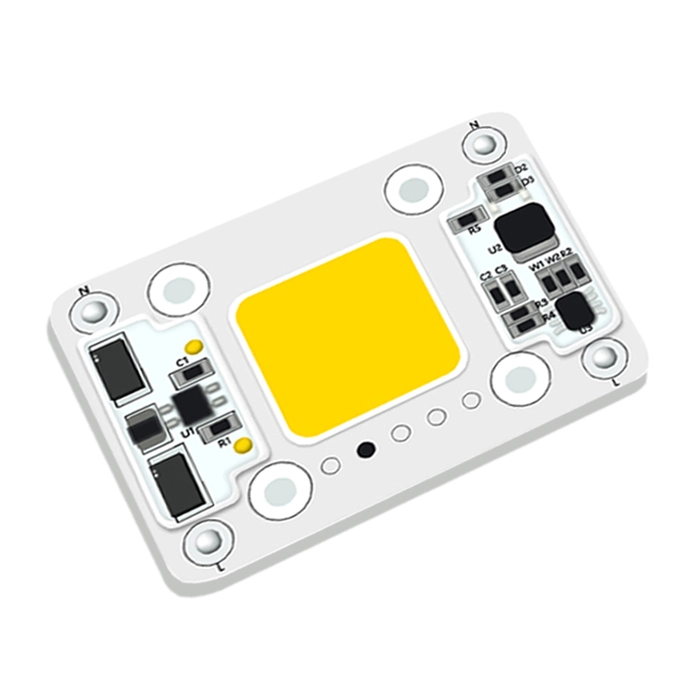




The performance, life and reliability of high-power COB (Chip on Board) LEDs depend largely on the effective implementation of heat dissipation technology. Although manufacturers may regard specific solutions as trade secrets, the key technologies for heat dissipation in the industry usually revolve around the following core directions:
High thermal conductivity substrate: ceramic substrates (such as aluminum nitride AlN, aluminum oxide Al₂O₃) or metal substrates (such as copper substrates, aluminum substrates) are used as the main heat dissipation carriers. Among them, the thermal conductivity of aluminum nitride (AlN) is as high as 170-230 W/m·K, far exceeding the 200 W/m·K of traditional aluminum substrates (aluminum substrates are relatively low in cost). In addition, copper-clad ceramic substrates (DBC) directly bond the copper layer to the ceramic surface at high temperature to achieve efficient heat conduction and electrical insulation.
Microstructure optimization: Design microgrooves, micropores or honeycomb structures on the substrate surface to increase the heat dissipation area and accelerate heat diffusion; at the same time, multi-layer composite structures (such as metal-ceramic-metal sandwich) are used to balance the thermal expansion coefficient and thermal conductivity.
Nano-scale thermal conductive adhesive/solder: Use thermal conductive adhesive or solder paste containing nano-silver and nano-diamond particles to fill the tiny gaps between the chip and the substrate to reduce the contact thermal resistance. For example, sintered silver technology can achieve high thermal conductivity and high reliability connection of about 250 W/m·K through low-temperature sintering of silver paste.
Graphene/carbon nanotube materials: Use graphene film or carbon nanotube array as interface material to quickly transfer heat with its ultra-high thermal conductivity (2000-5000 W/m·K).
Eutectic welding: Directly bond the LED chip to the substrate through eutectic welding processes such as Au-Sn alloy to reduce the thermal resistance caused by traditional silver glue.
No packaging/wire-free technology: Use flip chip or COB direct packaging to avoid the thermal resistance bottleneck caused by gold or copper wires.
Heat spreader: Use the principle of liquid evaporation-condensation cycle to achieve rapid heat spread, which is particularly suitable for high power density scenarios, and can be combined with microchannel heat dissipation structure to improve heat dissipation efficiency.
Micro heat pipes: embed heat pipes into the base of the radiator to quickly remove heat through capillary action.
Liquid metal cooling: use low-melting-point liquid metal (such as gallium-based alloy) as a cooling medium, and its thermal conductivity far exceeds that of traditional thermal paste.
Active cooling system: integrate micro fans, piezoelectric ceramic pumps or semiconductor refrigeration chips (TEC) to dynamically adjust the heat dissipation capacity.
Multi-physics simulation: use CFD computational fluid dynamics and thermal stress coupling simulation to optimize the heat dissipation path and structural design.
Temperature feedback control: built-in temperature sensors (such as NTC thermistors) dynamically adjust the drive current as needed to prevent overheating failure.
Phase change materials: add phase change materials such as paraffin to the radiator to absorb the large amount of heat generated instantly, thereby slowing down the temperature rise.
Silicon carbide (SiC) substrate: experimentally use SiC substrates, which have thermal conductivity close to AlN and better mechanical strength.
Quantum dot coating: apply radiation cooling coatings (such as infrared radiation materials) to dissipate heat in the form of electromagnetic waves.
The so-called “core secrets” often refer to the way manufacturers optimize the combination of these technologies, such as:
The balance between cost and performance (for example, replacing expensive AlN substrates with low-cost aluminum substrates plus optimized structures);
Specific details of patented processes (such as specific sintering temperature curves, micromachining methods);
Supply chain advantages (such as customized high-purity ceramic substrates or graphene materials).
In summary, the core of high-power COB LED heat dissipation technology lies in:
The design of low thermal resistance paths (from chip to environment);
Innovative application of high thermal conductivity materials;
The combination of active heat dissipation technology and intelligent control systems.
In actual applications, manufacturers will choose the most appropriate technical solution based on factors such as cost considerations, power density and reliability requirements.